
Acatl
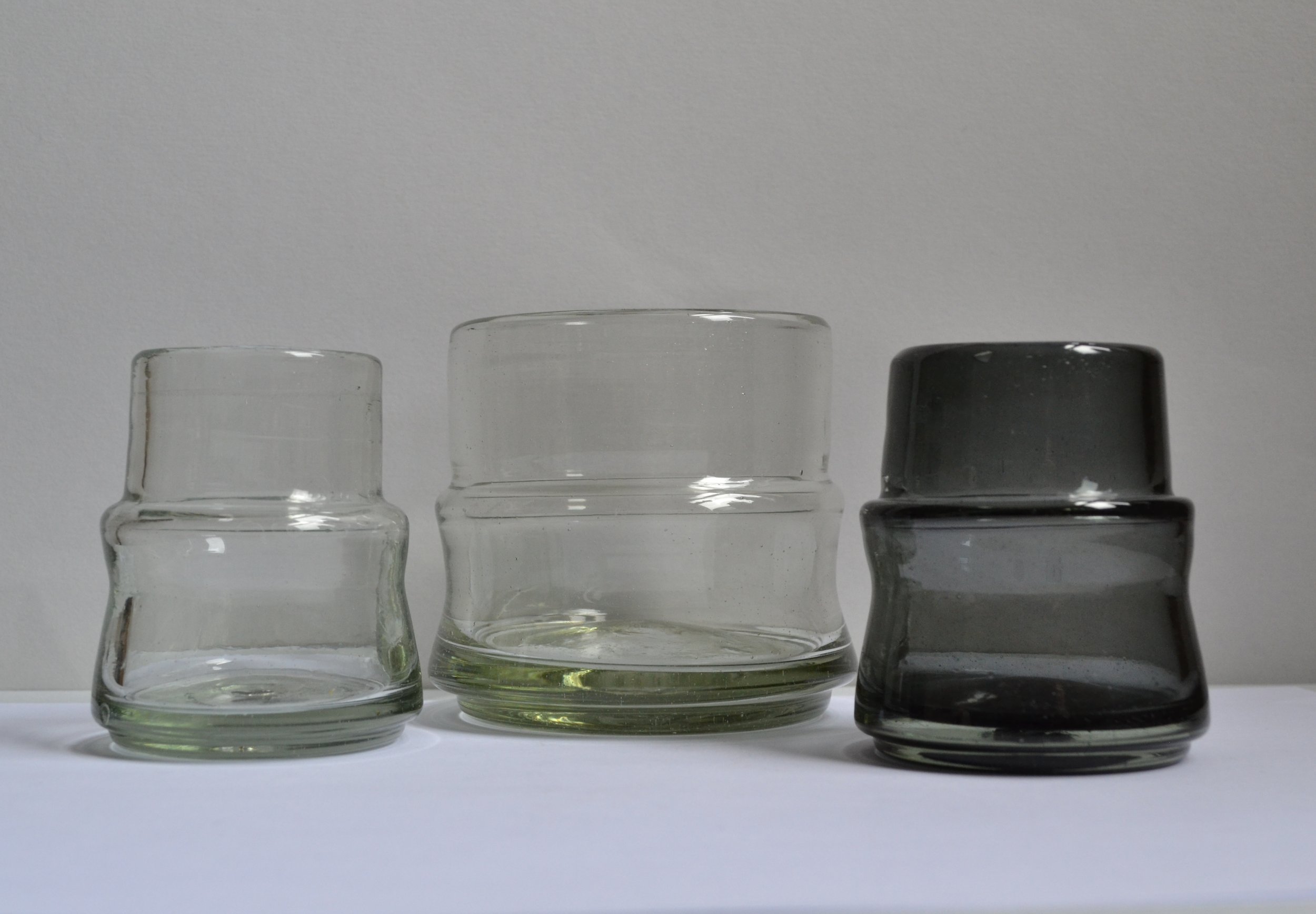
Acatl mezcal and cockatil.
MODERN STONES
The shape of this collection of glasses is manifested from the union of two elements.
A cylindrical center and a kind of wavy ring that forms an X shape that in turn refers to the way the ancient Mexicas tied their flowers or canes.
There is even a symbol for this "ACATL" or reed.
This form has also been used in architecture, the anahuacalli museum for example, if the central part of the building is observed on the facade, it makes this movement in the shape of an X that the reeds produce when tied to the center with force and this form gives stability to the tie to stay in vertical way.

Photo from Anahuacalli museum. Author Unknown
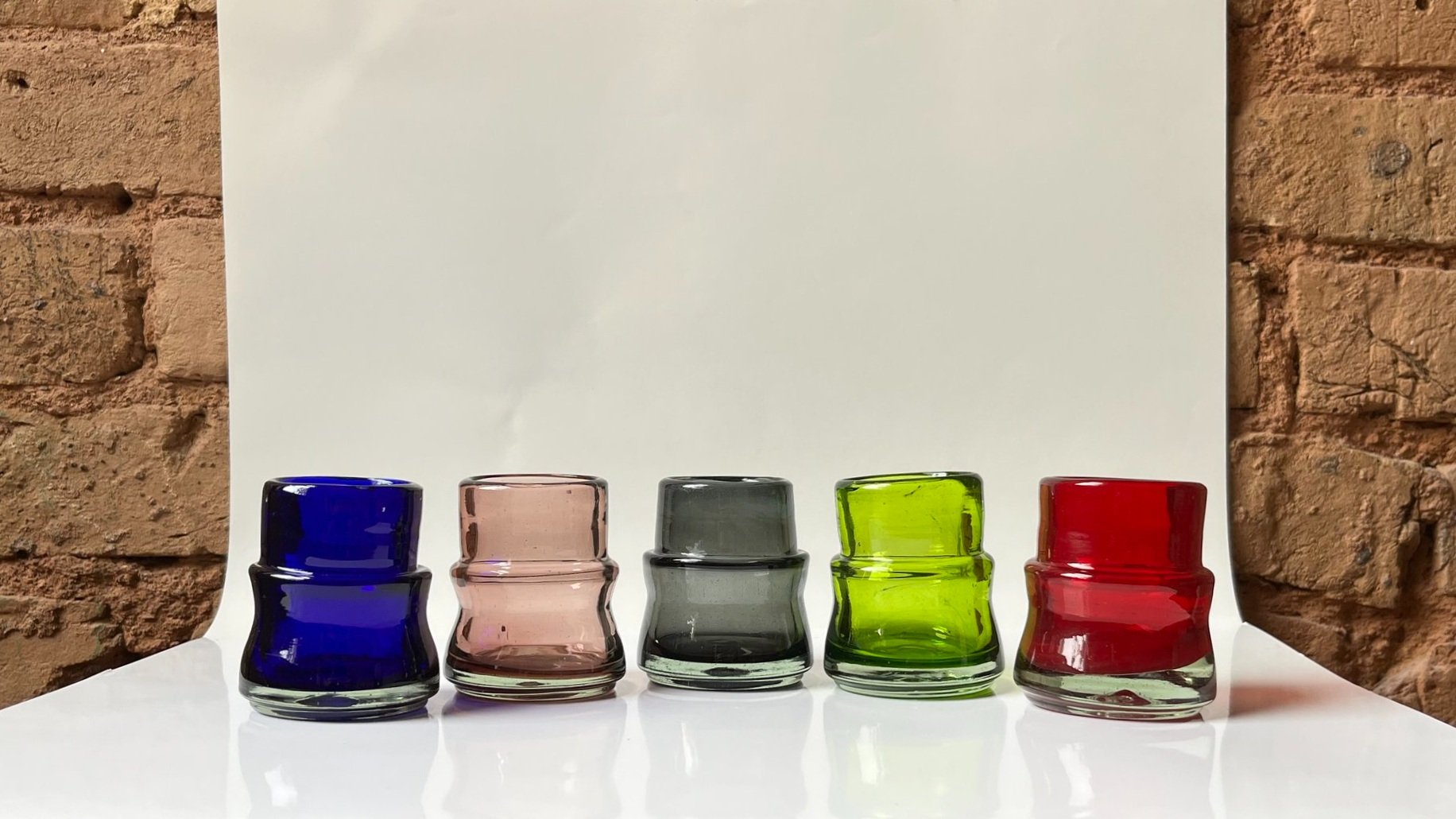
in the heart of Jalisco
From the traditional workshops in Tonalá, Jalisco, we present this collection of handblown glasses made in 100% recycled glass. The glasses can present some size variations and bubbles from the process of production, we love these details that give individuality and texture to the pieces.


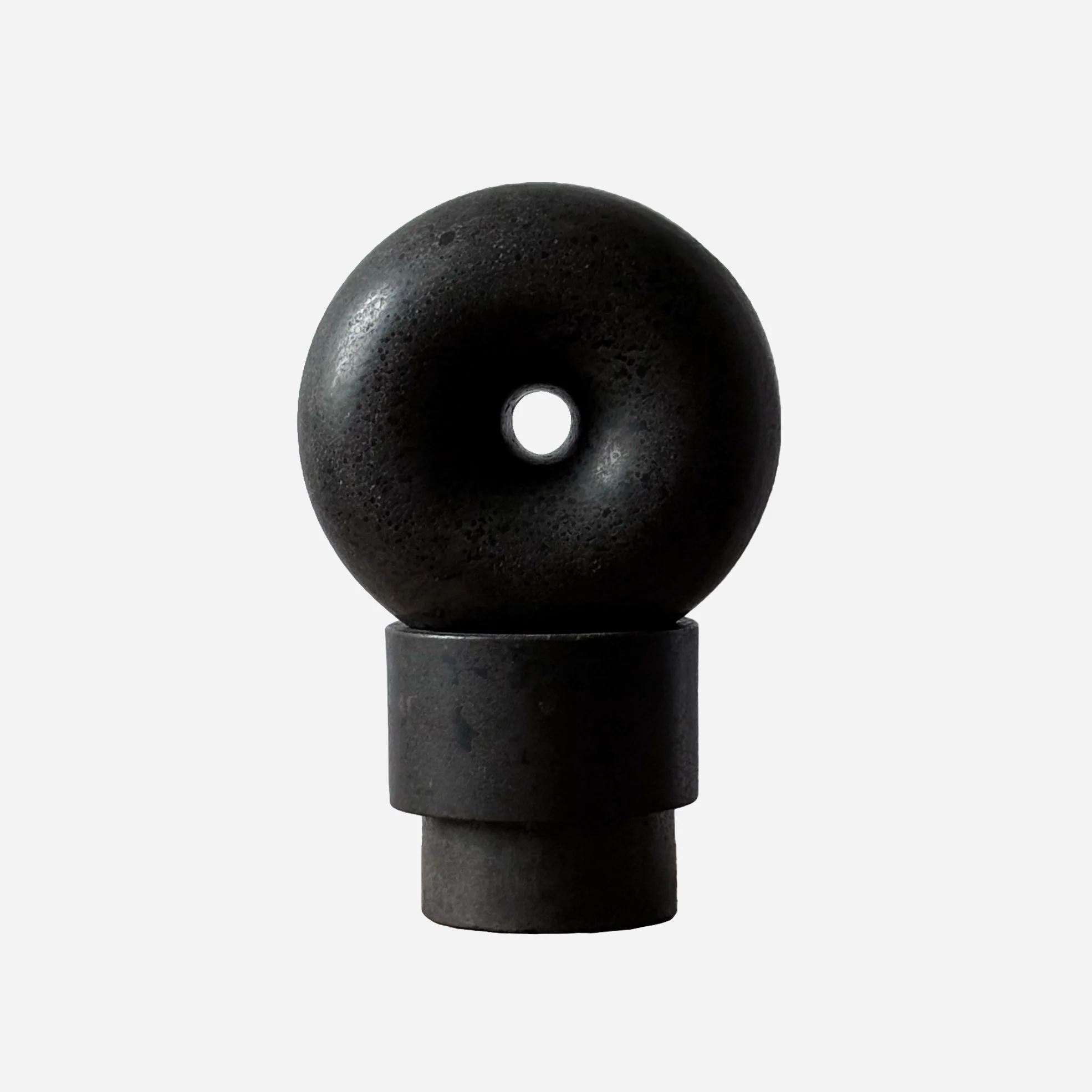
Rueda is part of Metates a work composed of two volcanic stone sculptures that explore wear as the trace of a relationship: between objects, between people, between time and matter.
Inspired by the metates or grinding stones—tools found across almost every culture since the dawn of humanity—these pieces evoke the primal act of grinding, rubbing and carving as a means of transformation and progress.
Rather than simply replicating traditional instruments, the sculptures focus on those metates marked by years of use. The interest lies in the eroded surfaces, in the way two bodies, through constant friction, generate a third form: a cavity, a void, or an imprint that binds them precisely, rarely allowing any other object to take its place.
In this way, the sculptures condense the memory of friction—not as an act of erosion, but as a process of encounter.

Dogs 4.
This collection of clay pieces is a collection of unique pieces made for La muerte tiene permiso* with design by Omar Ortiz Franco and production with Elena Felipe and Agripina Felipe, artisans from Michoacán. The beauty of their work lies in the peculiar finish that they give to their hand-painted and molded clay pieces.
The colors used are ceramic powder paints that are applied before burning and after the burnishing work, which consists of polishing the piece before burning. The collection explores the possibility of using the geometric and aesthetic elements with which they are already familiar from generations ago when their mothers taught them to work with clay and paint. Nature is his main source of inspiration and their finely crafted thin line drawings include deer, hares, flowers and other elements of Lake Patzcuaro and its surroundings.
For Omar, this collection explores the use of color and a first approach to this technique used by the Felipe Master artisans with the premise of not adding any new form other than the ones they already know in their work.

Donuts.
This collection of clay pieces is a collection of unique pieces made for La muerte tiene permiso* with design by Omar Ortiz Franco and production with Elena Felipe and Agripina Felipe, artisans from Michoacán. The beauty of their work lies in the peculiar finish that they give to their hand-painted and molded clay pieces.
The colors used are ceramic powder paints that are applied before burning and after the burnishing work, which consists of polishing the piece before burning. The collection explores the possibility of using the geometric and aesthetic elements with which they are already familiar from generations ago when their mothers taught them to work with clay and paint. Nature is his main source of inspiration and their finely crafted thin line drawings include deer, hares, flowers and other elements of Lake Patzcuaro and its surroundings.
For Omar, this collection explores the use of color and a first approach to this technique used by the Felipe Master artisans with the premise of not adding any new form other than the ones they already know in their work.

Dog Cone Sculpture.
This collection of clay pieces is a collection of unique pieces made for La muerte tiene permiso* with design by Omar Ortiz Franco and production with Elena Felipe and Agripina Felipe, artisans from Huáncito Michoacán.
The beauty of their work lies in the peculiar finish that they give to their hand-painted and molded clay pieces.
The colors used are ceramic powder paints that are applied before burning and after the burnishing work, which consists of polishing the piece before burning. The collection explores the possibility of using the geometric and aesthetic elements with which they are already familiar from generations ago when their mothers taught them to work with clay and paint. Nature is their main source of inspiration and their finely crafted thin line drawings include deer, hares, flowers and other elements of Lake Patzcuaro and its surroundings.
For Omar, this collection explores the use of color and a first approach to this technique used by the Felipe Master artisans with the premise of not adding any new form other than the ones they already know in their work.

Dog Cone Sculpture.
This collection of clay pieces is a collection of unique pieces made for La muerte tiene permiso* with design by Omar Ortiz Franco and production with Elena Felipe and Agripina Felipe, artisans from Michoacán. The beauty of their work lies in the peculiar finish that they give to their hand-painted and molded clay pieces.
The colors used are ceramic powder paints that are applied before burning and after the burnishing work, which consists of polishing the piece before burning. The collection explores the possibility of using the geometric and aesthetic elements with which they are already familiar from generations ago when their mothers taught them to work with clay and paint. Nature is their main source of inspiration and their finely crafted thin line drawings include deer, hares, flowers and other elements of Lake Patzcuaro and its surroundings.
For Omar, this collection explores the use of color and a first approach to this technique used by the Felipe Master artisans with the premise of not adding any new form other than the ones they already know in their work.

Dogs Cone box.
This collection of clay pieces is a collection of unique pieces made for La muerte tiene permiso* with design by Omar Ortiz Franco and production with Elena Felipe and Agripina Felipe, artisans from Michoacán. The beauty of their work lies in the peculiar finish that they give to their hand-painted and molded clay pieces.
The colors used are ceramic powder paints that are applied before burning and after the burnishing work, which consists of polishing the piece before burning. The collection explores the possibility of using the geometric and aesthetic elements with which they are already familiar from generations ago when their mothers taught them to work with clay and paint. Nature is his main source of inspiration and their finely crafted thin line drawings include deer, hares, flowers and other elements of Lake Patzcuaro and its surroundings.
For Omar, this collection explores the use of color and a first approach to this technique used by the Felipe Master artisans with the premise of not adding any new form other than the ones they already know in their work.

Our carafe collection is a tribute to the traditional pitchers of the regions of Tonalá and Tlaquepaque in Jalisco, these two regions developed during the period of the conquest as pottery centers.
Originally these bottles were used to store water in addition to keeping it a few degrees below room temperature, their low temperature cooking allows the jug to breathe water and this in contact with the outside air cools the jug and therefore the liquid inside.
To avoid moisture stains on the surfaces where the jug is placed, a plate is placed. The jugs were usually decorated with paintings around the body of the bottle, the most common are lines that border the circumference. In general, a glass of the same material will also serve as a lid to avoid insects inside the bottle.
Half Moon
The Half Moon carafe is specially designed to contain Mezcal, Tequila or any other liquor. Its conical shape refers to the shape of the agave leaves while the upper part takes the semi-spherical shape of the cup traditionally used to drink mezcal.
The head of the bottle also serves to contain two glasses of smaller diameters which can be used to serve the liquor or salt to accompany the drink.
The cups can be accommodated in different positions depending on the use you want to give them.

Our carafe collection is a tribute to the traditional pitchers of the regions of Tonalá and Tlaquepaque in Jalisco, these two regions developed during the period of the conquest as pottery centers.
Originally these bottles were used to store water in addition to keeping it a few degrees below room temperature, their low temperature cooking allows the jug to breathe water and this in contact with the outside air cools the jug and therefore the liquid inside.
To avoid moisture stains on the surfaces where the jug is placed, a plate is placed. The jugs were usually decorated with paintings around the body of the bottle, the most common are lines that border the circumference. In general, a glass of the same material will also serve as a lid to avoid insects inside the bottle.
Half Moon
The Half Moon carafe is specially designed to contain Mezcal, Tequila or any other liquor. Its conical shape refers to the shape of the agave leaves while the upper part takes the semi-spherical shape of the cup traditionally used to drink mezcal.
The head of the bottle also serves to contain two glasses of smaller diameters which can be used to serve the liquor or salt to accompany the drink.
The cups can be accommodated in different positions depending on the use you want to give them.
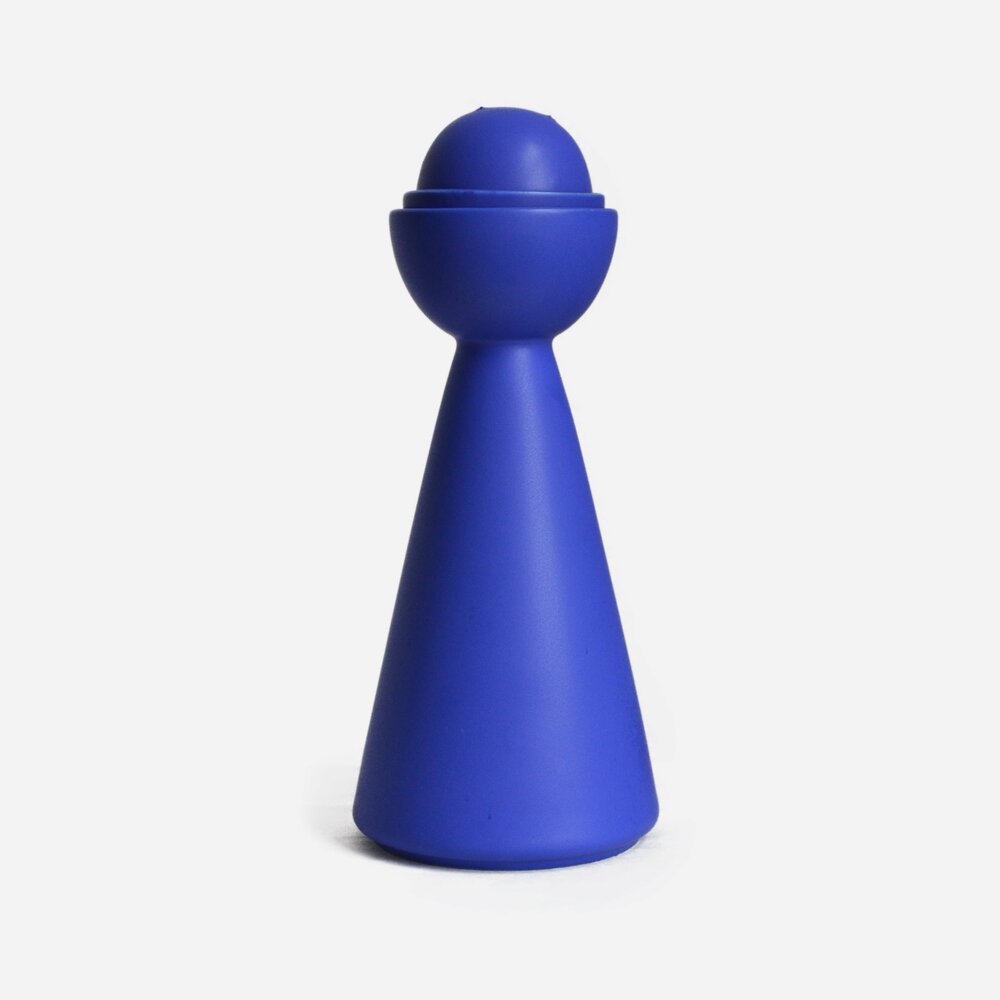
Our carafe collection is a tribute to the traditional pitchers of the regions of Tonalá and Tlaquepaque in Jalisco, these two regions developed during the period of the conquest as pottery centers.
Originally these bottles were used to store water in addition to keeping it a few degrees below room temperature, their low temperature cooking allows the jug to breathe water and this in contact with the outside air cools the jug and therefore the liquid inside.
To avoid moisture stains on the surfaces where the jug is placed, a plate is placed. The jugs were usually decorated with paintings around the body of the bottle, the most common are lines that border the circumference. In general, a glass of the same material will also serve as a lid to avoid insects inside the bottle.
Half Moon
The Half Moon carafe is specially designed to contain Mezcal, Tequila or any other liquor. Its conical shape refers to the shape of the agave leaves while the upper part takes the semi-spherical shape of the cup traditionally used to drink mezcal.
The head of the bottle also serves to contain two glasses of smaller diameters which can be used to serve the liquor or salt to accompany the drink.
The cups can be accommodated in different positions depending on the use you want to give them.

Our carafe collection is a tribute to the traditional pitchers of the regions of Tonalá and Tlaquepaque in Jalisco, these two regions developed during the period of the conquest as pottery centers.
Originally these bottles were used to store water in addition to keeping it a few degrees below room temperature, their low temperature cooking allows the jug to breathe water and this in contact with the outside air cools the jug and therefore the liquid inside.
To avoid moisture stains on the surfaces where the jug is placed, a plate is placed. The jugs were usually decorated with paintings around the body of the bottle, the most common are lines that border the circumference. In general, a glass of the same material will also serve as a lid to avoid insects inside the bottle.
Half Moon
The Half Moon carafe is specially designed to contain Mezcal, Tequila or any other liquor. Its conical shape refers to the shape of the agave leaves while the upper part takes the semi-spherical shape of the cup traditionally used to drink mezcal.
The head of the bottle also serves to contain two glasses of smaller diameters which can be used to serve the liquor or salt to accompany the drink.
The cups can be accommodated in different positions depending on the use you want to give them.

Our carafe collection is a tribute to the traditional pitchers of the regions of Tonalá and Tlaquepaque in Jalisco, these two regions developed during the period of the conquest as pottery centers.
Originally these bottles were used to store water in addition to keeping it a few degrees below room temperature, their low temperature cooking allows the jug to breathe water and this in contact with the outside air cools the jug and therefore the liquid inside.
To avoid moisture stains on the surfaces where the jug is placed, a plate is placed. The jugs were usually decorated with paintings around the body of the bottle, the most common are lines that border the circumference. In general, a glass of the same material will also serve as a lid to avoid insects inside the bottle.
Half Moon
The Half Moon carafe is specially designed to contain Mezcal, Tequila or any other liquor. Its conical shape refers to the shape of the agave leaves while the upper part takes the semi-spherical shape of the cup traditionally used to drink mezcal.
The head of the bottle also serves to contain two glasses of smaller diameters which can be used to serve the liquor or salt to accompany the drink.
The cups can be accommodated in different positions depending on the use you want to give them.

Our carafe collection is a tribute to the traditional pitchers of the regions of Tonalá and Tlaquepaque in Jalisco, these two regions developed during the period of the conquest as pottery centers.
Originally these bottles were used to store water in addition to keeping it a few degrees below room temperature, their low temperature cooking allows the jug to breathe water and this in contact with the outside air cools the jug and therefore the liquid inside.
To avoid moisture stains on the surfaces where the jug is placed, a plate is placed. The jugs were usually decorated with paintings around the body of the bottle, the most common are lines that border the circumference. In general, a glass of the same material will also serve as a lid to avoid insects inside the bottle.
Half Moon
The Half Moon carafe is specially designed to contain Mezcal, Tequila or any other liquor. Its conical shape refers to the shape of the agave leaves while the upper part takes the semi-spherical shape of the cup traditionally used to drink mezcal.
The head of the bottle also serves to contain two glasses of smaller diameters which can be used to serve the liquor or salt to accompany the drink.
The cups can be accommodated in different positions depending on the use you want to give them.

Our carafe collection is a tribute to the traditional pitchers of the regions of Tonalá and Tlaquepaque in Jalisco, these two regions developed during the period of the conquest as pottery centers.
Originally these bottles were used to store water in addition to keeping it a few degrees below room temperature, their low temperature cooking allows the jug to breathe water and this in contact with the outside air cools the jug and therefore the liquid inside.
To avoid moisture stains on the surfaces where the jug is placed, a plate is placed. The jugs were usually decorated with paintings around the body of the bottle, the most common are lines that border the circumference. In general, a glass of the same material will also serve as a lid to avoid insects inside the bottle.
Half Moon
The Half Moon carafe is specially designed to contain Mezcal, Tequila or any other liquor. Its conical shape refers to the shape of the agave leaves while the upper part takes the semi-spherical shape of the cup traditionally used to drink mezcal.
The head of the bottle also serves to contain two glasses of smaller diameters which can be used to serve the liquor or salt to accompany the drink.
The cups can be accommodated in different positions depending on the use you want to give them.

HALF MOON
The Half Moon ceramic carafe is specially designed to contain Mezcal, Tequila or any other liquor but as a high temperature ceramic you can use it for water, oil or just as a decorative flower vase. Its conical shape refers to the shape of the agave leaves while the upper part takes the semi-spherical shape of the cup traditionally used to drink mezcal creating a beautiful sculptural vase.
The head of the bottle also serves to contain two glasses of smaller diameters which can be used to serve the liquor or salt to accompany the drink.
The cups can be accommodated in different positions depending on the use you want to give them.
Our carafe collection is a tribute to the traditional pitchers cantaros or botellones of the regions of Tonalá and Tlaquepaque in Jalisco, these two regions developed during the period of the conquest as pottery centers.
Originally these cantaros were used to store water in addition to keeping it a few degrees below room temperature, their low temperature cooking allows the jug to breathe water and this in contact with the outside air cools the jug and therefore the liquid inside.
To avoid moisture stains on the surfaces where the jug is placed, a plate is placed. The jugs were usually decorated with paintings around the body of the bottle, the most common are lines that border the circumference. In general, a glass of the same material will also serve as a lid to avoid insects inside the bottle.

HALF MOON
The Half Moon carafe is specially designed to contain Mezcal, Tequila or any other liquor. Its conical shape refers to the shape of the agave leaves while the upper part takes the semi-spherical shape of the cup traditionally used to drink mezcal.
The head of the bottle also serves to contain two glasses of smaller diameters which can be used to serve the liquor or salt to accompany the drink.
The cups can be accommodated in different positions depending on the use you want to give them.
Our carafe collection is a tribute to the traditional pitchers cantaros or botellones of the regions of Tonalá and Tlaquepaque in Jalisco, these two regions developed during the period of the conquest as pottery centers.
Originally these cantaros were used to store water in addition to keeping it a few degrees below room temperature, their low temperature cooking allows the jug to breathe water and this in contact with the outside air cools the jug and therefore the liquid inside.
To avoid moisture stains on the surfaces where the jug is placed, a plate is placed. The jugs were usually decorated with paintings around the body of the bottle, the most common are lines that border the circumference. In general, a glass of the same material will also serve as a lid to avoid insects inside the bottle.
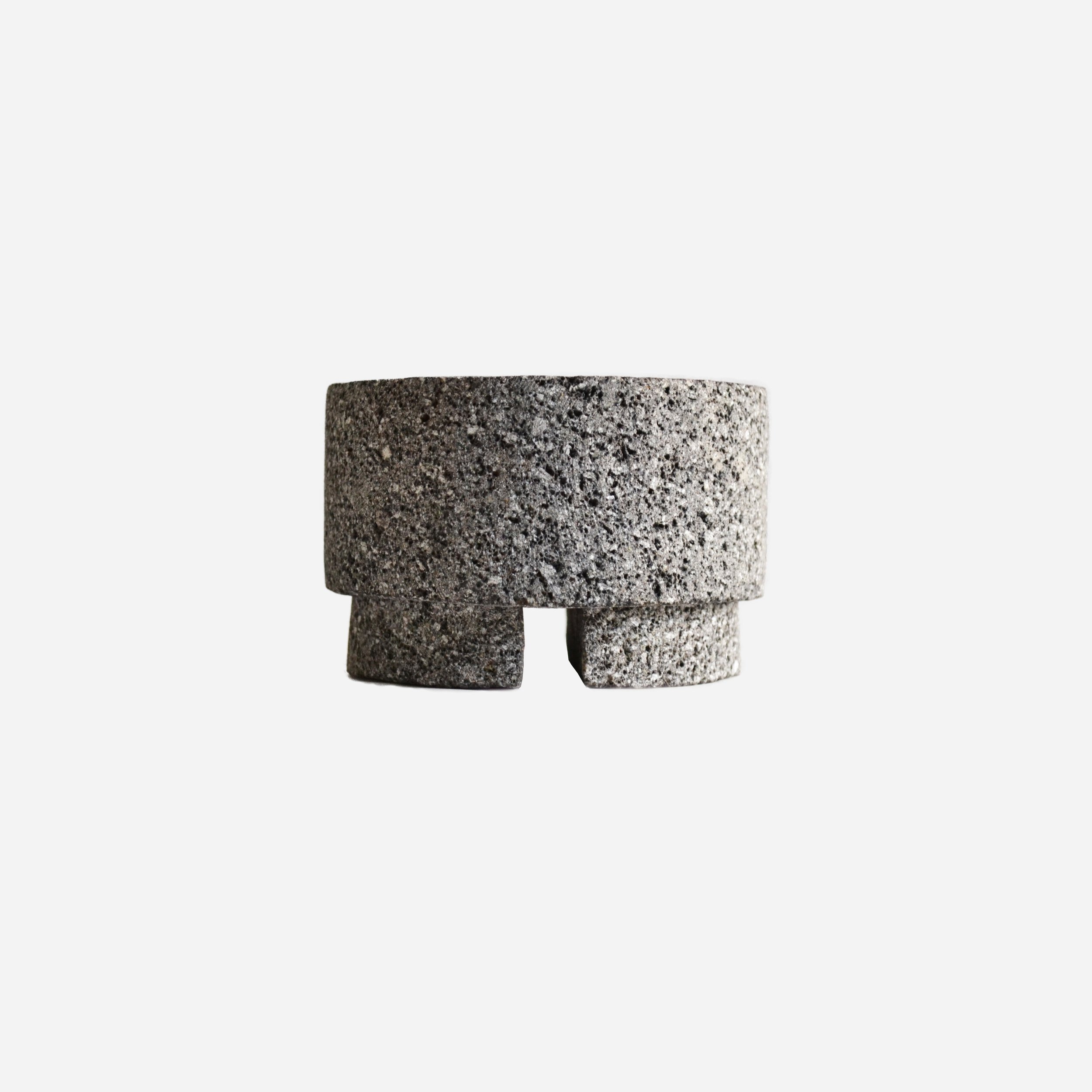
The collection of temple sculptures are inspired by the postclassic period of pre-Hispanic Mesoamerican ceremonial architecture from the center and south of what today makes up the country of Mexico.
Temple central is a 3-piece detachable sculpture.
Crafted and finished on the shores of Lake Cajititlán, Jalisco, Mexico. This area is recognized for its extensive amount of basalt stone traditionally used to make molcajetes. This type of stone is recolected manually and is a material known for its hardness and aesthetic appeal and texture. Various pre-Hispanic sculptures and archaeological objects have been made with this material in the past.
The central sculpture is made with two processes, initially the stone is cut with an angle grinder and it is forged by hand with a chisel giving the initial shape, then the angle grinder is used again to give the finishes. Doing a manual mixed process. This production technique creates unique silhouettes and ensures that each piece is truly one of a kind.
While designed as a base, the piece also serves as a stand-alone display object. Its abstract minimal design makes it a focal point in any setting, showcasing its exquisite craftsmanship. Each piece is produced in small batches, resulting in slight variations between pieces. Such features may include small deformities, scratches, or pitting on the surface, adding to the unique charm of each one's archeological appearance.
The Temple Central is not just a decorative item but a work of art. Its minimalist, abstract and geometric language make it a perfect choice for design professionals and architects looking to introduce a piece with historical references and an evolving aesthetic into their designs.

The collection of temple sculptures are inspired by the postclassic period of pre-Hispanic Mesoamerican ceremonial architecture from the center and south of what today makes up the country of Mexico.
Temple South is a 4-piece detachable sculpture.
Crafted and finished on the shores of Lake Cajititlán, Jalisco, Mexico. This area is recognized for its extensive amount of basalt stone traditionally used to make molcajetes. This type of stone is recolected manually and is a material known for its hardness and aesthetic appeal and texture. Various pre-Hispanic sculptures and archaeological objects have been made with this material in the past.
The South sculpture is made with two processes, initially the stone is cut with an angle grinder and it is forged by hand with a chisel giving the initial shape, then the angle grinder is used again to give the finishes. Doing a manual mixed process. This production technique creates unique silhouettes and ensures that each piece is truly one of a kind.
While designed as a base, the piece also serves as a stand-alone display object. Its abstract minimal design makes it a focal point in any setting, showcasing its exquisite craftsmanship. Each piece is produced in small batches, resulting in slight variations between pieces. Such features may include small deformities, scratches, or pitting on the surface, adding to the unique charm of each one's archeological appearance.
The Temple South is not just a decorative item but a work of art. Its minimalist, abstract and geometric language make it a perfect choice for design professionals and architects looking to introduce a piece with historical references and an evolving aesthetic into their designs.

*Please note : larger sets are cheaper per item. Email us for bulk orders or special requirements.
The shape of this collection of glasses is manifested from the union of two elements.
A cylindrical center and a kind of wavy ring that forms an X shpae that in turn refers to the way the ancient Mexicas tied their flowers or canes.
There is even a symbol for this "ACATL" or reed.
This form has also been used in architecture, the anahuacalli museum for example, if the central part of the building is observed on the facade, it makes this movement in the shape of an X that the reeds produce when tied to the center with force and this form gives stability to the tie to stay in vertical way.

*Please note : larger sets are cheaper per item. Email us for bulk orders or special requirements.
The shape of this collection of glasses is manifested from the union of two elements.
A cylindrical center and a kind of wavy ring that forms an X shpae that in turn refers to the way the ancient Mexicas tied their flowers or canes.
There is even a symbol for this "ACATL" or reed.
This form has also been used in architecture, the anahuacalli museum for example, if the central part of the building is observed on the facade, it makes this movement in the shape of an X that the reeds produce when tied to the center with force and this form gives stability to the tie to stay in vertical way.

*Please note : larger sets are cheaper per item. Email us for bulk orders or special requirements.
The shape of this collection of glasses is manifested from the union of two elements.
A cylindrical center and a kind of wavy ring that forms an X shape that in turn refers to the way the ancient Mexicas tied their flowers or canes.
There is even a symbol for this "ACATL" or reed.
This form has also been used in architecture, the anahuacalli museum for example, if the central part of the building is observed on the facade, it makes this movement in the shape of an X that the reeds produce when tied to the center with force and this form gives stability to the tie to stay in vertical way.

*Please note : larger sets are cheaper per item. Email us for bulk orders or special requirements.
The shape of this collection of glasses is manifested from the union of two elements.
A cylindrical center and a kind of wavy ring that forms an X shpae that in turn refers to the way the ancient Mexicas tied their flowers or canes.
There is even a symbol for this "ACATL" or reed.
This form has also been used in architecture, the anahuacalli museum for example, if the central part of the building is observed on the facade, it makes this movement in the shape of an X that the reeds produce when tied to the center with force and this form gives stability to the tie to stay in vertical way.

*Please note : larger sets are cheaper per item. Email us for bulk orders or special requirements.
The shape of this collection of glasses is manifested from the union of two elements.
A cylindrical center and a kind of wavy ring that forms an X shpae that in turn refers to the way the ancient Mexicas tied their flowers or canes.
There is even a symbol for this "ACATL" or reed.
This form has also been used in architecture, the anahuacalli museum for example, if the central part of the building is observed on the facade, it makes this movement in the shape of an X that the reeds produce when tied to the center with force and this form gives stability to the tie to stay in vertical way.

*Please note : larger sets are cheaper per item. Email us for bulk orders or special requirements.
The shape of this collection of glasses is manifested from the union of two elements.
A cylindrical center and a kind of wavy ring that forms an X shpae that in turn refers to the way the ancient Mexicas tied their flowers or canes.
There is even a symbol for this "ACATL" or reed.
This form has also been used in architecture, the anahuacalli museum for example, if the central part of the building is observed on the facade, it makes this movement in the shape of an X that the reeds produce when tied to the center with force and this form gives stability to the tie to stay in vertical way.

*Please note : larger sets are cheaper per item. Email us for bulk orders or special requirements.
Mezcalero, Tequilero, Aperitif, Digestif & Liqueur Glasses.
The shape of this collection of glasses is manifested from the union of two elements.
A cylindrical center and a kind of wavy ring that forms an X shapae that in turn refers to the way the ancient Mexicas tied their flowers or canes.
There is even a symbol for this "ACATL" or reed.
This form has also been used in architecture, the anahuacalli museum for example, if the central part of the building is observed on the facade, it makes this movement in the shape of an X that the reeds produce when tied to the center with force and this form gives stability to the tie to stay in vertical way.

*Please note : larger sets are cheaper per item. Email us for bulk orders or special requirements.
The shape of this collection of glasses is manifested from the union of two elements.
A cylindrical center and a kind of wavy ring that forms an X shpae that in turn refers to the way the ancient Mexicas tied their flowers or canes.
There is even a symbol for this "ACATL" or reed.
This form has also been used in architecture, the anahuacalli museum for example, if the central part of the building is observed on the facade, it makes this movement in the shape of an X that the reeds produce when tied to the center with force and this form gives stability to the tie to stay in vertical way.

*Please note : larger sets are cheaper per item. Email us for bulk orders or special requirements.
The shape of this collection of glasses is manifested from the union of two elements.
A cylindrical center and a kind of wavy ring that forms an X shpae that in turn refers to the way the ancient Mexicas tied their flowers or canes.
There is even a symbol for this "ACATL" or reed.
This form has also been used in architecture, the anahuacalli museum for example, if the central part of the building is observed on the facade, it makes this movement in the shape of an X that the reeds produce when tied to the center with force and this form gives stability to the tie to stay in vertical way.

*Please note : larger sets are cheaper per item. Email us for bulk orders or special requirements.
The shape of this collection of glasses is manifested from the union of two elements.
A cylindrical center and a kind of wavy ring that forms an X shpae that in turn refers to the way the ancient Mexicas tied their flowers or canes.
There is even a symbol for this "ACATL" or reed.
This form has also been used in architecture, the anahuacalli museum for example, if the central part of the building is observed on the facade, it makes this movement in the shape of an X that the reeds produce when tied to the center with force and this form gives stability to the tie to stay in vertical way.

*Please note : larger sets are cheaper per item. Email us for bulk orders or special requirements.
The shape of this collection of glasses is manifested from the union of two elements.
A cylindrical center and a kind of wavy ring that forms an X shpae that in turn refers to the way the ancient Mexicas tied their flowers or canes.
There is even a symbol for this "ACATL" or reed.
This form has also been used in architecture, the anahuacalli museum for example, if the central part of the building is observed on the facade, it makes this movement in the shape of an X that the reeds produce when tied to the center with force and this form gives stability to the tie to stay in vertical way.

*Please note : larger sets are cheaper per item. Email us for bulk orders or special requirements.
The shape of this collection of glasses is manifested from the union of two elements.
A cylindrical center and a kind of wavy ring that forms an X shpae that in turn refers to the way the ancient Mexicas tied their flowers or canes.
There is even a symbol for this "ACATL" or reed.
This form has also been used in architecture, the anahuacalli museum for example, if the central part of the building is observed on the facade, it makes this movement in the shape of an X that the reeds produce when tied to the center with force and this form gives stability to the tie to stay in vertical way.
Metlapil is part of Metates a work composed of two volcanic stone sculptures that explore wear as the trace of a relationship: between objects, between people, between time and matter.
Inspired by the metates or grinding stones—tools found across almost every culture since the dawn of humanity—these pieces evoke the primal act of grinding, rubbing and carving as a means of transformation and progress.
Rather than simply replicating traditional instruments, the sculptures focus on those metates marked by years of use. The interest lies in the eroded surfaces, in the way two bodies, through constant friction, generate a third form: a cavity, a void, or an imprint that binds them precisely, rarely allowing any other object to take its place.
In this way, the sculptures condense the memory of friction—not as an act of erosion, but as a process of encounter.